Musée d'Orsay
Paris, France
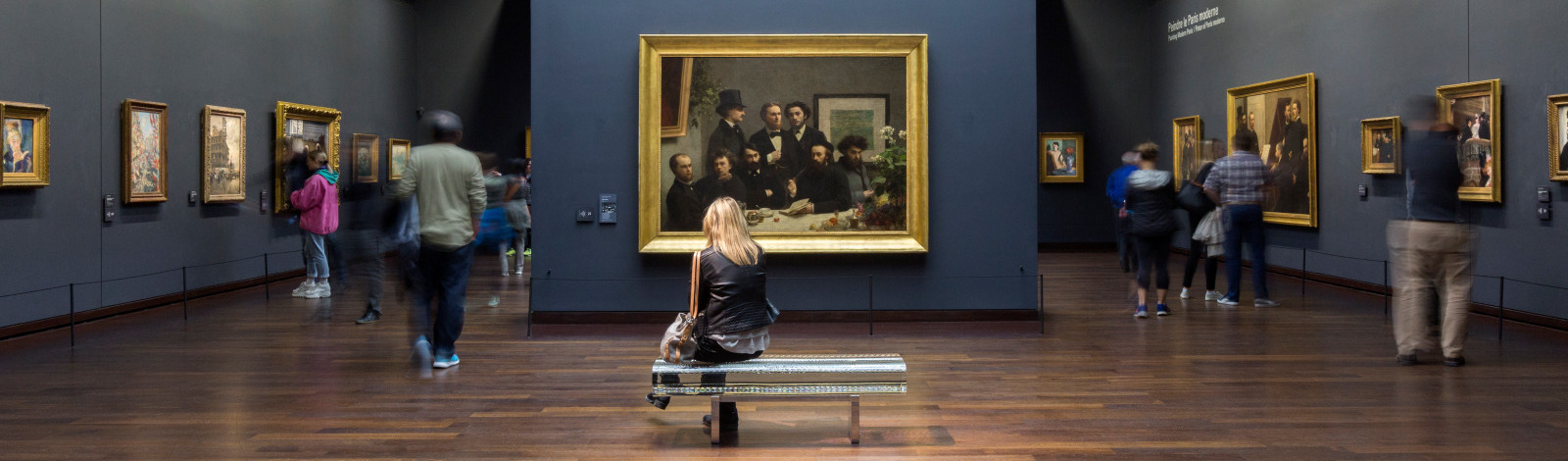
The Musée d'Orsay occupies a former railway station beside the Seine, opposite the Tuileries gardens. Built for the Paris Universal Exhibition of 1900, the building retains the long nave and dramatic volume of its original purpose. That architectural setting gives a visit an immediate connection to the changing city depicted in many of the works on display. The collections explore artistic production between 1848 and 1914, with Impressionist and Post-Impressionist painting forming a particularly recognisable thread. Sculpture, photography, decorative arts and architectural drawings place those paintings within a wider account of the period. Moving between the central hall and adjoining galleries reveals how industrial development, urban life and new approaches to colour and form reshaped visual culture. There is scope for both a focused visit and a slower exploration across several media. Audio and guided visits provide additional context, while the museum's cafés and restaurant offer places to pause within the historic building. The upper levels bring a different perspective on the former station and its riverside surroundings. With the Seine immediately outside, the museum fits naturally into a walk connecting the Left Bank with central Paris.